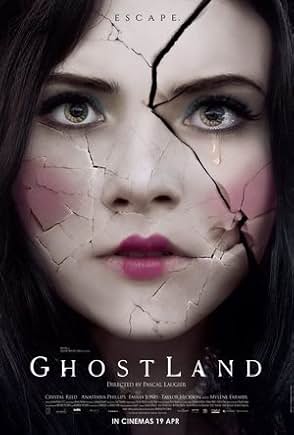
Some horror films made to be frighten, and some others are horror films that hurt.
Pascal Laugier’s Incident in a Ghostland belongs to the latter category — a film that doesn’t simply ask you to look at fear but to inhabit it, to sit inside its claustrophobic silence and feel its pulse behind your ribs.
Incident in a Ghostland that released in 2018 masquerades as a haunted-house story, but what it truly unveils is something far more intimate and devastating: a meditation on trauma, storytelling, and the fragile inventions of the human mind when reality becomes unbearable.
It is not a movie that easy to watch, nor is it meant to be.
From its first frames, Laugier constructs a world that different — not because of what happens, but because of how it feels to exist within it.
Within minutes, we know we’ve entered a space where comfort and logic do not apply.
This is the essence of Ghostland: horror not as spectacle, but as psychological immersion. It’s not a film that only scares us, but it *breaks* us — and what remains afterward.
The premise seems deceptively familiar: a mother and her two daughters move into a remote, decaying country house inherited from a deceased aunt.
The new beginning quickly becomes a nightmare when intruders arrive, shattering their sense of safety. The rest of the film unfolds around the lingering consequences of that night and after.
One of the daughter, Beth, grows up to be a successful horror novelist; and the other, Vera, never recovers from the trauma.
When Beth returns to the house years later, she finds herself pulled into the same darkness she thought she had escaped.
On paper, it’s the kind of setup we’ve seen countless times before — the haunted domestic space, the family trauma, the unreliable narrator.
Beth, the central figure of Ghostland, is a writer.
She has made a career out of transforming horror into fiction — a detail that might seem incidental but becomes the film’s philosophical backbone.
Storytelling, for her, is how she maintains control over the chaos of her past. Laugier uses this trait to turn Ghostland into a meditation on the nature of fiction itself.
Why do we tell stories of monsters and madness? Is it to entertain, or to exorcise what we cannot articulate? For Beth, horror becomes both therapy and imprisonment.
Each story she writes is an attempt to master her trauma, to cage it in words — yet those same words trap her.
Crystal Reed, as adult Beth, brings a haunted restraint to her role. Her calmness is deceptive — a surface of composure that trembles under invisible weight.
She embodies a woman who has learned to live inside her own story, even as it collapses around her.
Emilia Jones, as young Beth, bridges innocence and awareness with remarkable delicacy.
But the film’s most devastating performance belongs to Taylor Hickson as Vera.
Her portrayal of a psyche in ruins is almost unbearable in its rawness. There’s nothing performative about her breakdowns — they feel witnessed, not acted.
Laugier doesn’t give the audience a solid ground to stand on. He wants us to lose our bearings, to feel the disorientation of trauma from the inside.
In this sense, Ghostland is less a narrative than an experience — a hall of mirrors where the difference between past and present, dream and reality, becomes terrifyingly blurred.
Every wall, every mirror, every doll is a reflection of pain that has been contained rather than exorcised.
The story’s progression mirrors the fragmented logic of memory itself — looping, inconsistent, shifting between states of consciousness without warning.
The true brilliance of Incident in a Ghostland lies in how it translates psychological trauma into spatial design.
The house — that old, creaking doll-filled monstrosity — becomes the perfect metaphor for the human mind under siege.
It’s cluttered with memory, suffocating with detail, and constantly rearranging itself in the dark.
Laugier doesn’t pity his characters; he inhabits them. Despite its cruelty, Incident in a Ghostland is a remarkably controlled film.
Every shot, every object, every shaft of light serves a psychological purpose. The little things in the film carry its own plot to give us a hint in every frame
What Incident in a Ghostland captures with painful accuracy is the logic of trauma: the way time collapses, how the body remembers what the mind forgets, and how the mind creates illusions to survive its own breaking point.
Even silence becomes a weapon. There are stretches where the absence of sound feels unbearable, forcing the audience to listen to their own heartbeat.
This is not horror that presents trauma as spectacle. It’s horror that invites you to experience the helplessness of it.
By the midpoint, we no longer trust our own senses — just as Beth doesn’t. That shared disorientation becomes the film’s most empathetic gesture.
Even the ornate ugliness of the setting reflects the over-decorated way the mind hides its own scars.
The film’s emotional intensity rests heavily on its cast, and they deliver performances of startling commitment.
The camera often lingers close to her face, forcing us into intimacy with her pain. Her eyes carry the film’s moral gravity: a reminder that terror isn’t loud; sometimes it’s the silence that kills you.
The result is a paradoxical tenderness: an understanding that to witness someone’s deepest fear is, in a way, to confront them.
Survival becomes both victory and curse — an endless negotiation between remembering and forgetting.
Laugier understands that empathy and horror are not opposites, but reflections.
To feel horror deeply is to recognize another person’s fragility — and, by extension, your own.
Watching Incident in a Ghostland is an act of endurance. It is not horror entertainment. It doesn’t reward with catharsis or jump scares.
It grinds down your defenses, not through gore, but through repetition, through the unbearable persistence of fear. And yet, it entertain me very well to the end
—
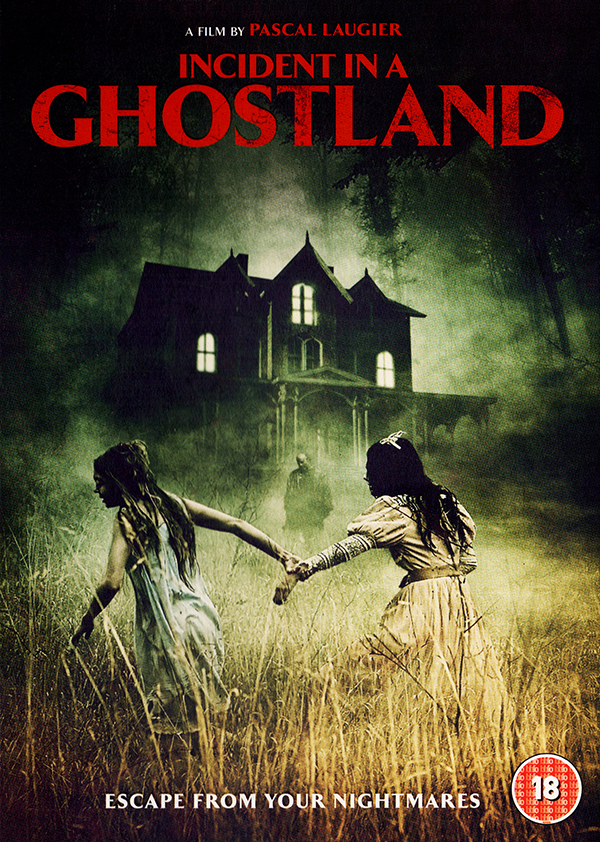
Final Reflection (with light spoiler)
What makes Incident in a Ghostland so unsettling is that it contains no supernatural evil. There are no ghosts, no curses, no demonic forces.
The “ghosts” are human — memories, echoes, remnants of violence that refuse to fade.
By stripping away the supernatural, Laugier brings horror closer to the psychological realm.
The “Ghostland” of the title is not a place haunted by spirits, but a mental territory haunted by experience.
The incident is not a single night of terror but the continuous existence of trauma itself — looping, replaying, reshaping identity.
There’s a moment near the end of Incident in a Ghostland when the nature of Beth’s reality is finally revealed then it reframes everything we’ve seen, turning horror into an act of psychic survival.
By constantly blurring the line between what is real and what might be imagined.
The imagination, he suggests, is both the mind’s greatest gift and its most seductive trap. Beth is not just the film’s protagonist — she is its author and its audience.
Her mind is the stage, her trauma the script.
Watching her navigate the nightmare feels like reading a story as it’s being written, one page bleeding into the next with no way to know where the fiction ends.
What we took for madness is, in truth, a form of resistance, a form of survival — the imagination’s final defense against the unbearable.
Beneath the cruelty and suffocating fear, there was something profoundly human: the mind’s refusal to die, even when the body and spirit have been shattered.
That’s what makes Incident in a Ghostland linger.
Because it isn’t about ghosts at all, but about trauma how to live with them, cracked but not destroyed.
And I know it’s not an easy film to love, but it’s an impossible one to forget.
Even though it is unusual protagonist survive in this kind of film, but I’m very glad it did.

 BOARD OF WONDER
Leave a comment