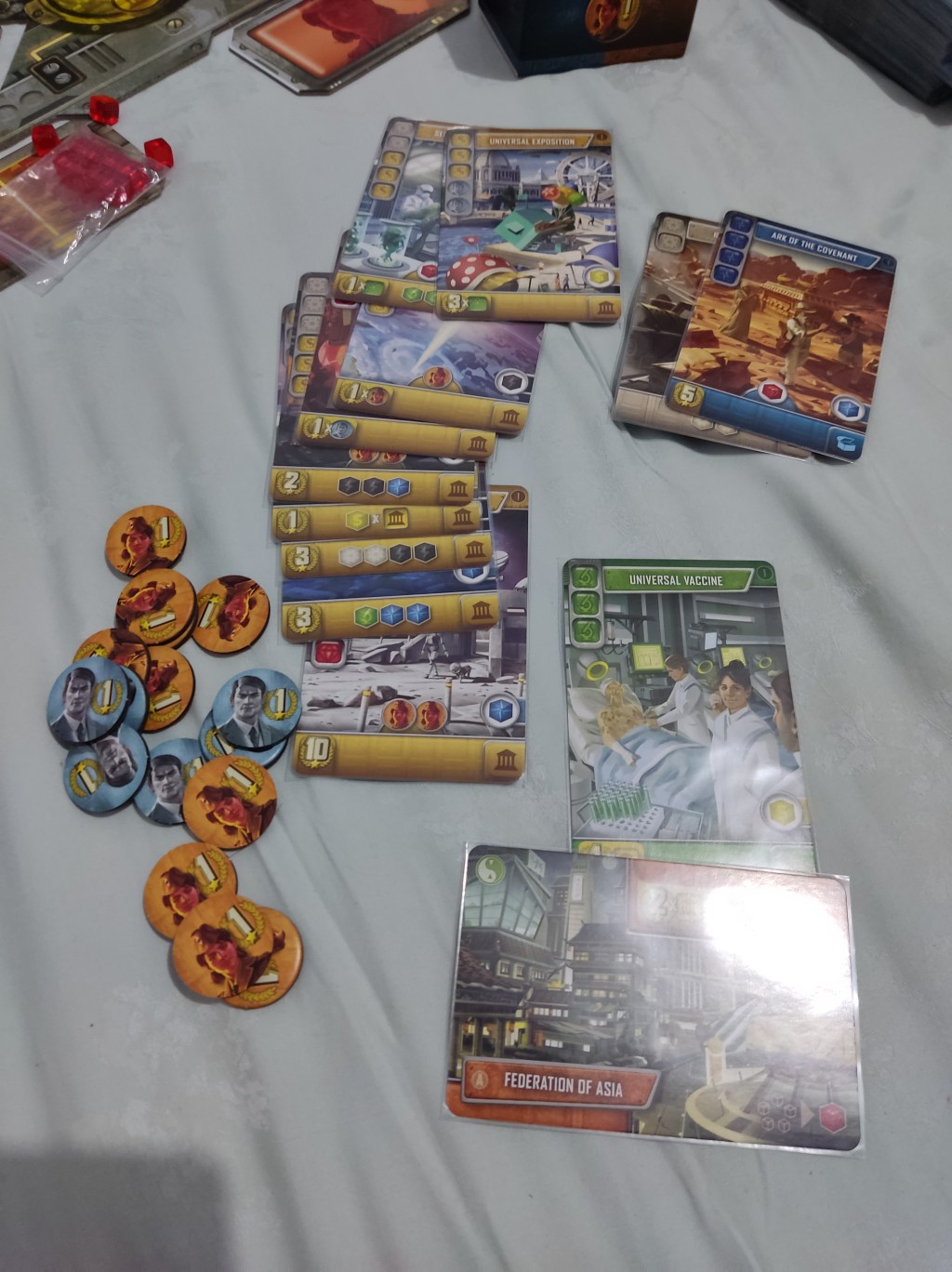
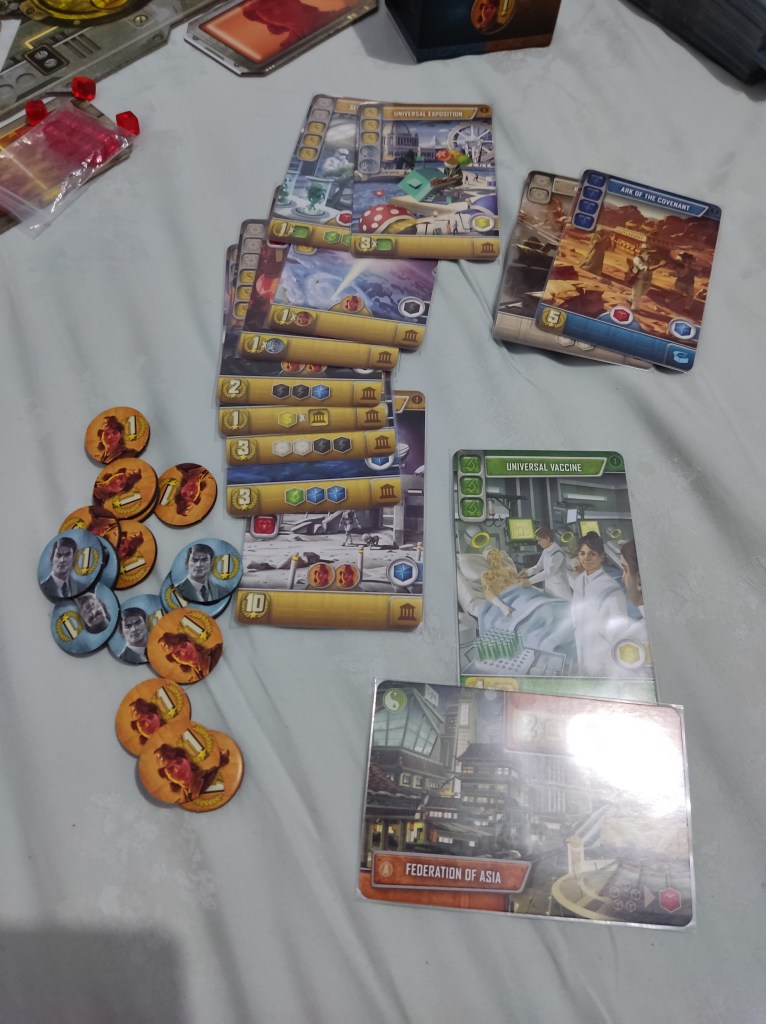
In this dystopian future, nations of the world are crumbling and left with 5 expanding empires that fight over hegemony of the world. Player, as the leader of these new empires will choose their development path by planning, converting resources, and building to produce more resources.
The game itself have relatively short gameplay although happens in 4 rounds with total 8 phases. This happens because the setup only take several minutes and nature of the game that happens simultaneously between players either in drafting and planning phase. But don’t get me wrong, the first time we play, it took us more than 60 minutes not including setup and that is because we face with dozens of cards, cards, and more cards to draft and not to mention how to use it. But after several play it went faster because we are getting to know the card better, and we will tend to know more the longer we play. By the time I wrote this, it only took us around 30 minutes to play including the setup.
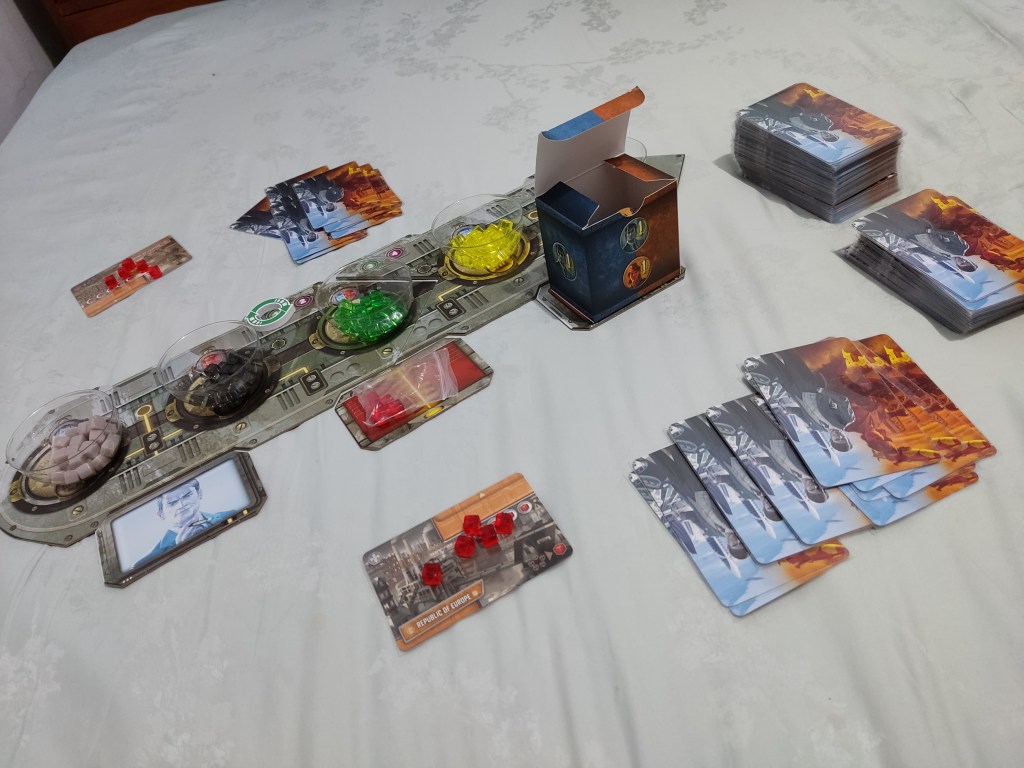
There are several charms in this game that attract us to play it often beside the low game time and crunchy decision. The first is the multi use of cards. Although we can only play to construct or discard to gain resource in planning phase, but it’s enough to make us ponder starting from drafting phase especially when we reach 3rd round. The words that always cross our minds are : “Can I built it?”, “Will this card come back to me?”, “Should I discard this card? or that card?”, and sometimes “Should we cut it?” when we know what our opponent need.
Second are the draft mechanic. By choosing draft instead the usual draw to gain cards, we’ll be facing relatively same condition and same dilema between players and this is the only phase that we’ll be interacting with other player. And because the nature draft mechanic, I prefer to play this game between 2 and 4 players so each player will have 3 or 4 cards from their initial draw so player have the knowledge what their opponents after and ho we anticipated it in future drafts.
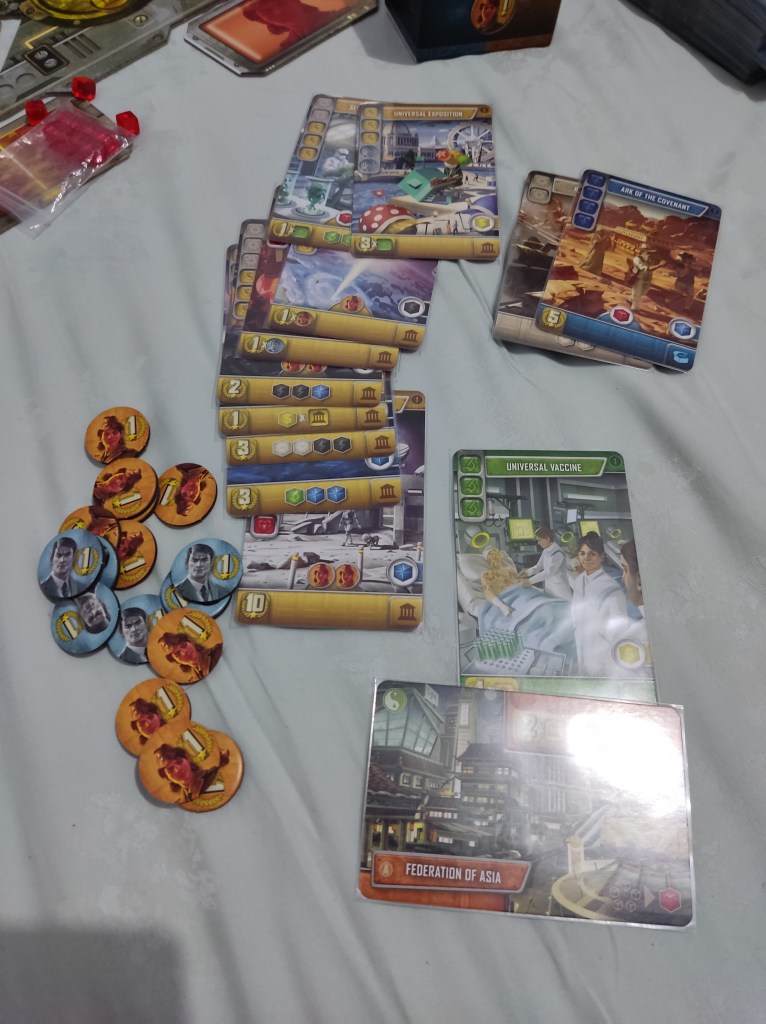
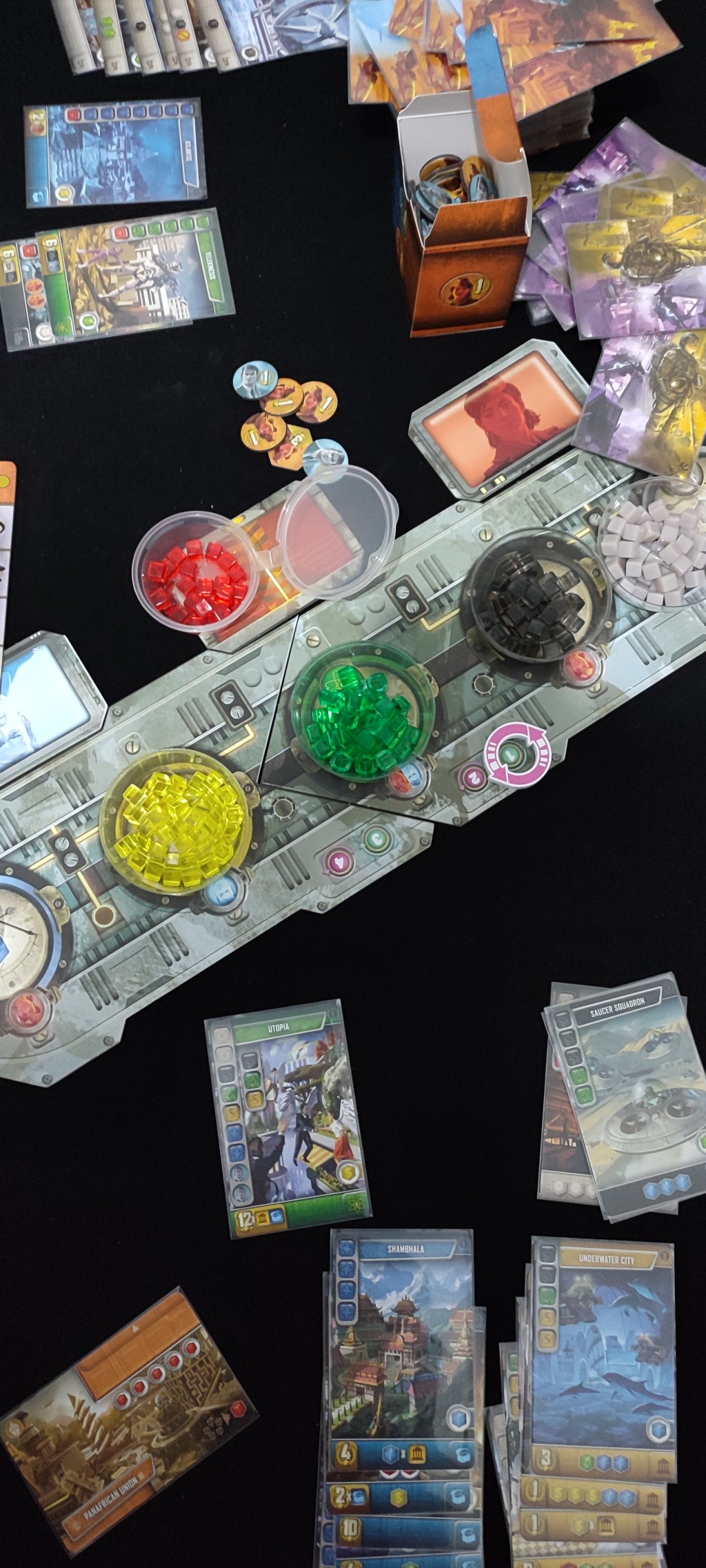
Third are the production sequences. In this game, usually we only produce 5 resources, starting from the lowest are Materials, Energy, Science, Gold, and until the highest are Exploration, and if you own the expansion you may produce the 2 characters (Generals and Financiers) and even Krystallium. The first time we play it, we didn’t notice these sequence and we just run all production at the same time with the consequences that our first and second turn production are not that good. But after we knew, suddenly we have a wider option to prioritize the construction and have more rewarding experience from production and better at scoring our points.
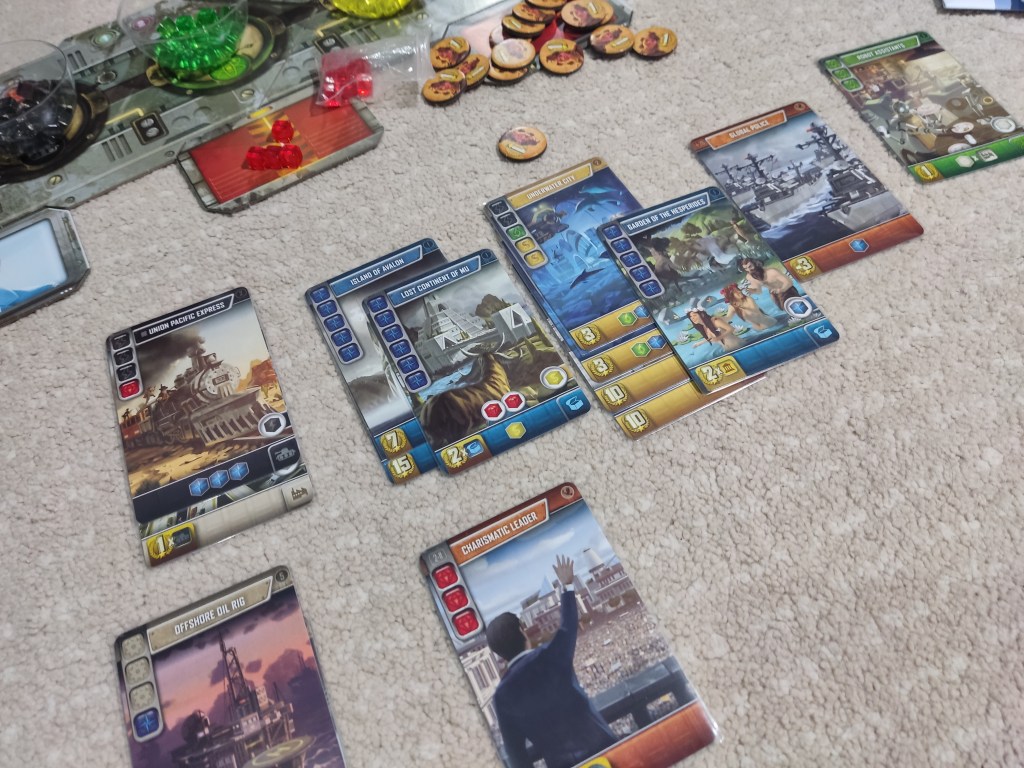
The game come with solo mode that not much different from a multiplayer game. Player still drafting their cards and planning as they use to do in multiplayer mode, with minor tweaks in how to draft the cards then how we planned using those drawn cards. At setup we prepared 8 stack of cards and with each stack consist of 5 cards, then at each round we choose a stack and decide to keep all 5 cards or we may discard 2 from our hand to draw 5 other cards from the deck and choose only one, and we may repeat this process until there is only 1 left. We’ll be repeating this step twice in a round, so in a round we’ll may have maximum 10 cards to be planned or minimum 2 cards. The only downside this solo mode for me, is we only try exceed our own score instead getting challenged by Automa, but nevertheless it is beyond my expectation and it always sparks fun facing a new puzzly challenge to optimize and exceed previous score. Owning “It’s A Wonderful World” is like having a tamed tiger pet that looks intimidating when you don’t know yet, but after knowing it, you can play it casually between other games or even play it once or twice after dinner. Me and my wife often play it after working, even sometimes run one or two campaign, but it is for next time for me to review it.




 BOARD OF WONDER
Leave a comment